Secretary of the Hanoi Party Committee Nguyen Duy Ngoc called on council deputies to use their expertise, creativity and reform-oriented mindset to decide major issues of the city, remove practical obstacles and drive strong socio-economic growth.
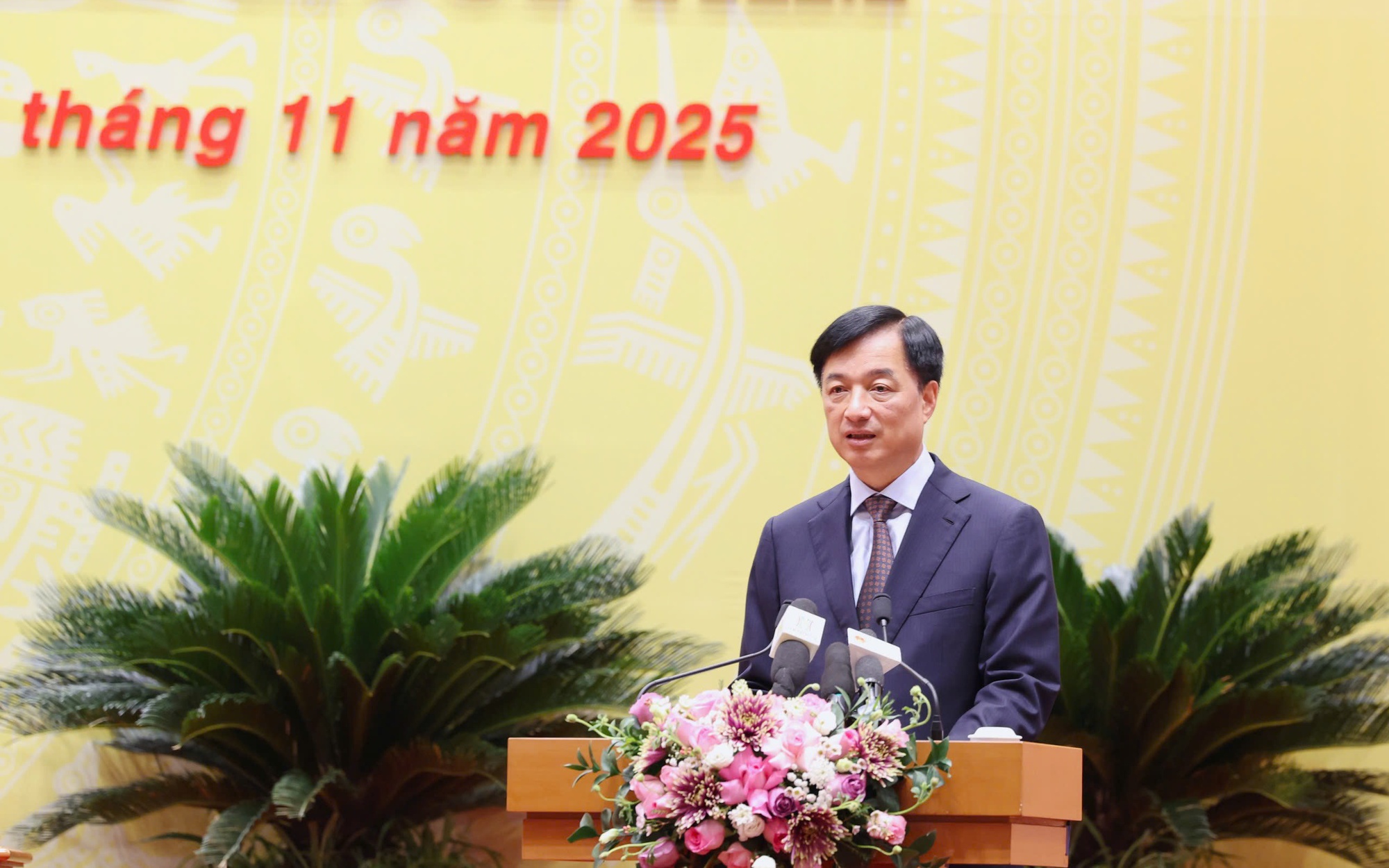
Secretary of the Hanoi Party Committee Nguyen Duy Ngoc.
Ngoc noted that 2025 holds special importance as Hanoi successfully organized Party congresses at all levels and the 18th Congress of the municipal Party Committee for the 2025–2030 term. He said this marks a turning point in thinking, vision, institutional reform and the governance model for the capital's development.
The city has implemented strategic goals and priorities in a coordinated and effective manner. It has achieved strong and notable results that lay a solid foundation and create momentum for socio-economic development in 2026 and for the entire upcoming term.
The capital's economy posted significant gains, with 23 out of 24 key indicators expected to meet or exceed plan. GRDP is estimated to reach 8.5 percent and per capita GRDP is estimated at VND176.4 million (US$7,060).
State budget revenue is expected to reach VND641.7 trillion (US$25.7 billion), up nearly 25 percent compared with 2024. FDI reached US$4.1 billion, an increase of 52 percent compared with 2024 and a leading highlight of the capital's economy nationwide.
Science, technology, innovation and digital transformation advanced further and remained central to the development vision for the new era. Hanoi ranked first nationwide in digital transformation and topped the innovation ranking for the third consecutive year. Multiple digital platforms have been launched to serve residents.
The city has also pushed forward major reforms, including the streamlined political apparatus and the two-tier urban administration model that began operation on July 1, 2025. These changes strengthened decentralization, simplified administrative procedures and accelerated comprehensive digital transformation.
Ngoc commended the People's Council for strong improvements in 2025, highlighting its proactive, responsible and effective performance.
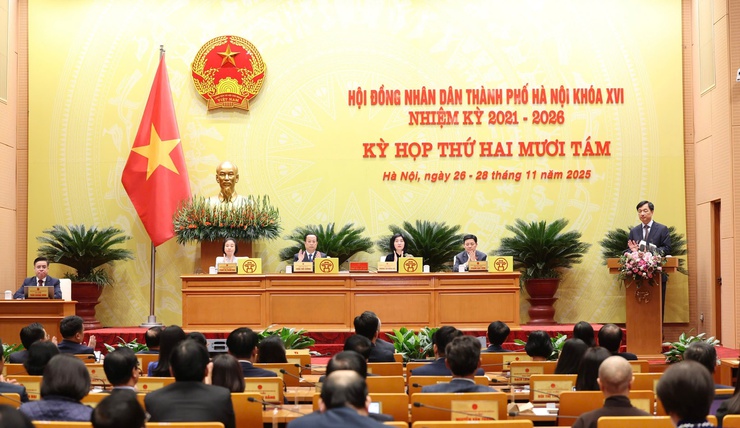
Overview of the meeting.
According to the Secretary, the capital and the country are entering a new era of development. The workload for all levels and sectors of the city is enormous, with many tasks that have never been undertaken before. He said the city government must renew its thinking and act more decisively, noting that the remaining time of 2025 is limited.
He asked the People's Council to focus on several key tasks.
First, it must translate the Action Program implementing the Resolution of the 18th Party Congress of the City into the full-term working program of the People's Council for 2026–2031. It should issue mechanisms and policies and transform them into programs, projects, implementation plans and supervision plans with clear goals, timelines and solutions.
These efforts must be coordinated with advisory bodies of the Party Committee, the Inspection Commission, the Organization Commission and the Vietnam Fatherland Front Committee of Hanoi to deliver concrete results. The aim is to strengthen the political system and drive socio-economic development so that the city can achieve double-digit growth from 2026 onward and serve residents and businesses better.
Second, it must strictly and efficiently implement directions of the central government and the municipal Party Committee on preparations for the election of the 16th National Assembly and the election of People's Councils at all levels for the 2026–2031 term.
This includes personnel preparation, with attention to candidates who are scientists or experts in science and technology, innovation, digital transformation, health and education. He underscored that this is a major and critical task that requires the highest level of focus from now until the end of the term.
Third, the People's Council must further renew its leadership methods and strengthen oversight in the context of the two-tier urban administration model. It should continue reviewing, guiding and supporting commune and ward authorities after administrative restructuring to ensure consistent and effective implementation of assigned tasks.
Fourth, the People's Council must view supervision as a key tool to strengthen the performance of the two tiers of local government.
Oversight must ensure that socio-economic development meets the needs and expectations of voters and residents. He asked the Council to intensify supervision of key tasks and bottlenecks, respond promptly to public concerns and follow through on all recommendations until they are fully addressed.
Fifth, he said the session must discuss and decide core long-term issues, including 21 reports and 49 resolutions.
These decisions will shape the capital's development and must be aligned with the Resolution of the 18th municipal Party Congress, strategic decisions of the central government and the three institutional pillars of the capital.
He asked deputies to study documents carefully, evaluate effectiveness and consider the potential impact of policies to ensure that adopted resolutions are legally sound, constitutional, feasible and capable of resolving practical difficulties and supporting strong socio-economic development.
With the highest determination to fulfill the goals and tasks of 2025 and 2026, the first year of the 2026–2030 term, Ngoc expressed confidence that the 28th session of the People's Council will complete all of its agenda and demonstrate the intelligence, creativity and reform spirit of council deputies in deciding major issues of the city.