Reporting at the meeting, Nguyen Tien Cuong, Secretary of the Party Committee and Chairman of the Commune People's Council, said Thanh Tri Commune was assigned ten socio economic targets for 2025. All ten targets have been completed or exceeded at this point.
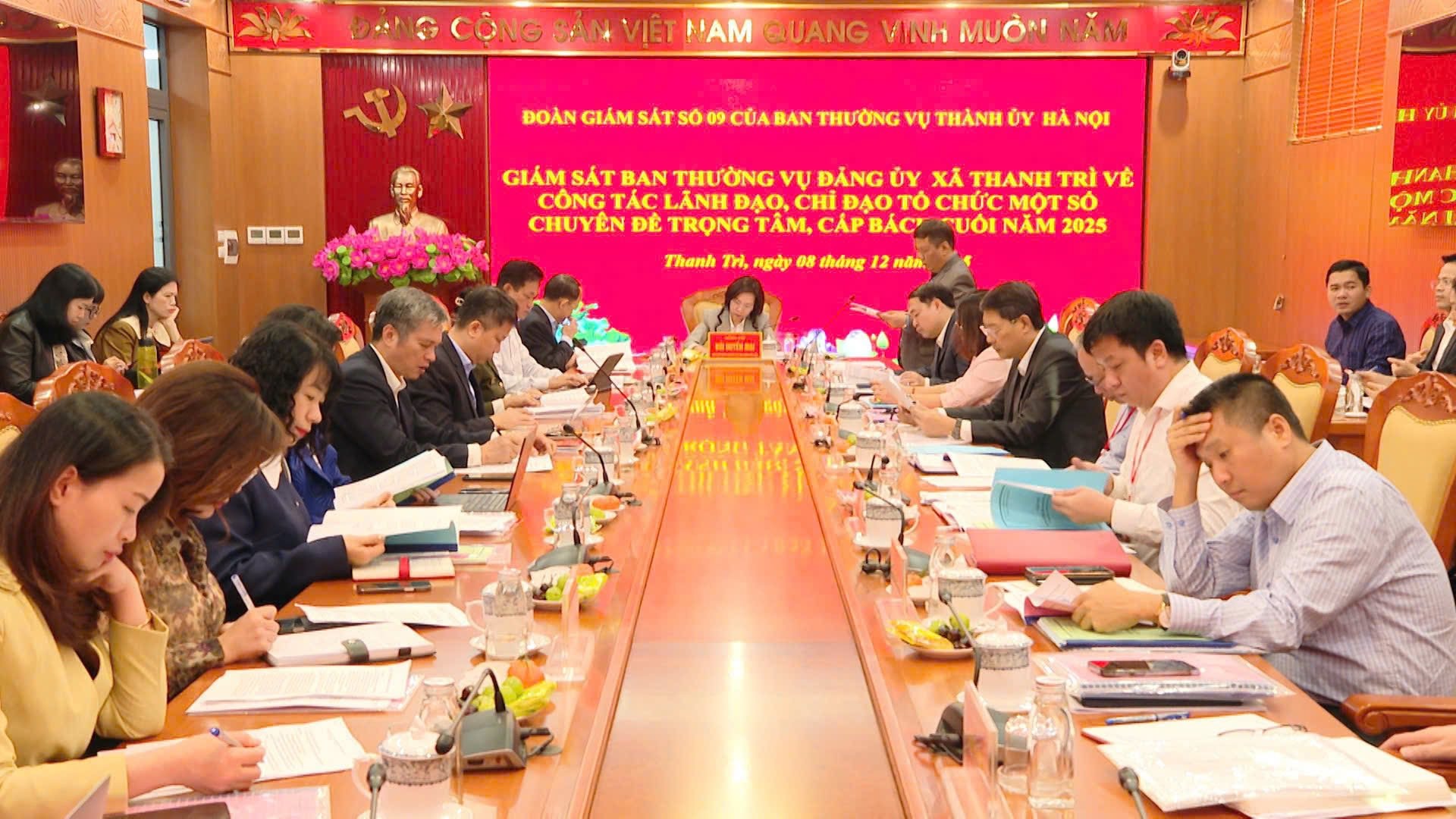
Overview of the meeting.
As of November 30, total state budget revenue in the commune reached VND22.542 billion (US$0.90 million), equal to 169 percent of the assigned estimate. Commune budget expenditure reached VND216.925 billion (US$8.68 million), or 73.63 percent of the adjusted estimate.
Average income in 2025 is estimated at VND89.2 million (US$3,568) per person, an increase of 6.57 percent from 2024.
The on time administrative case resolution rate stands at 99.1 percent, all documents are exchanged electronically, digital transformation is being implemented consistently and political security and social order remain stable.
The Thanh Tri Commune Party Committee has coordinated decentralization and authorization with administrative reform and digital transformation. The commune has disseminated central and city directives through Party cell meetings, briefings and electronic communication and issued 37 directives detailing clear assignments while stepping up inspection and supervision.
In public investment disbursement, the commune has followed the city's instructions, applied the green lane mechanism for the Ngoc Hoi Bridge project and adjusted project ownership under the two tier administration model.
As of November 30, the commune has disbursed more than VND199 billion (US$7.96 million), or 60.91 percent of the plan. The main difficulties relate to new regulations on resettlement, the transfer of land management authority and delayed investment guidelines. The commune has proposed solutions to continue reviewing tasks, coordinating site clearance and accelerating project implementation.
From the actual implementation of the two tier urban administration model, Thanh Tri Commune proposed that the city strengthen personnel in specialized fields such as information technology, finance, planning and site clearance to meet rising workloads.
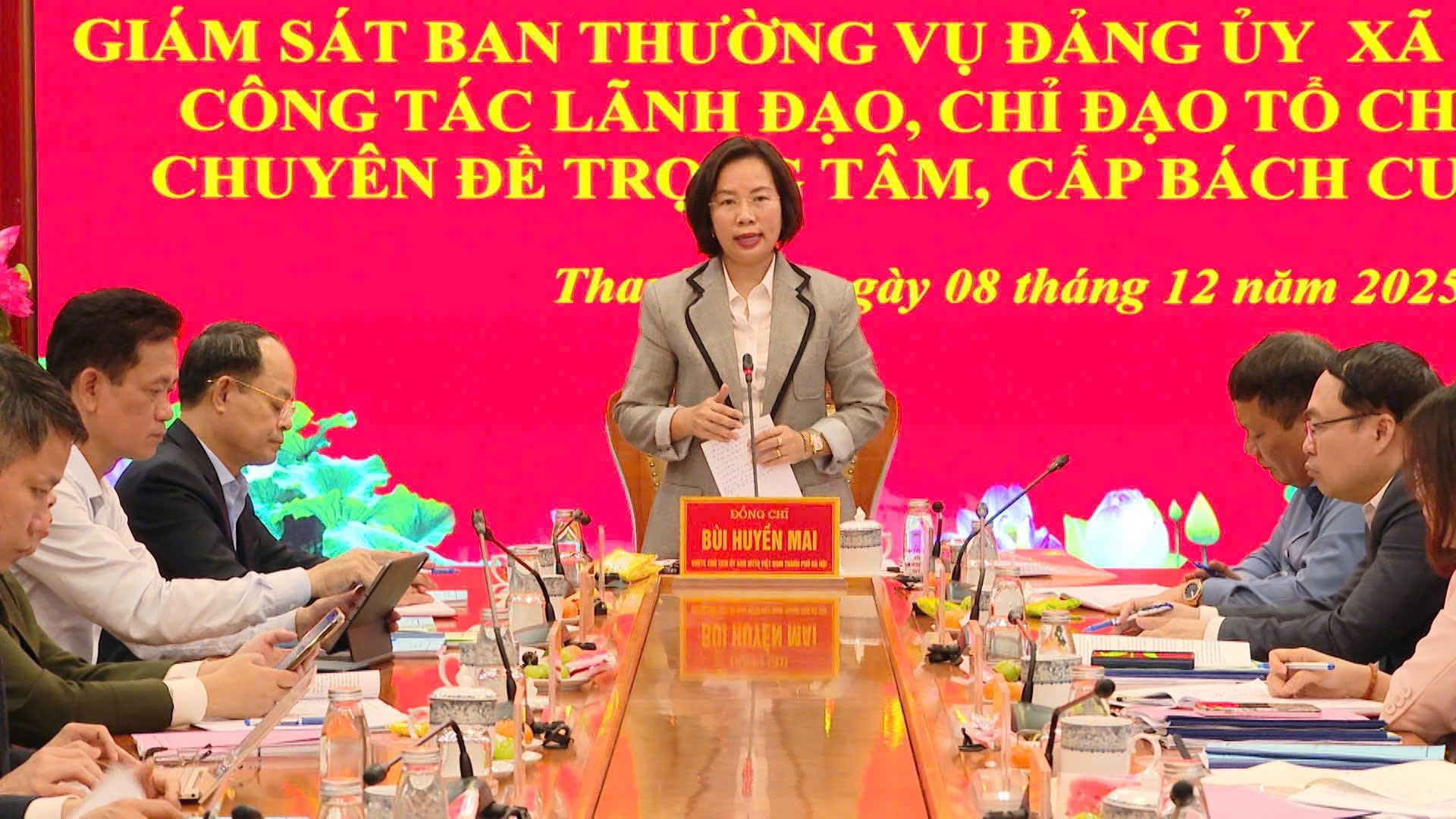
Overview of the meeting.
The commune requested the city to invest in synchronized digital infrastructure, integrate shared software systems and complete land and public asset databases to ensure connectivity and accuracy. It also asked departments to promptly issue unified guidelines on investment procedures, compensation, resettlement and public asset management under new regulations.
Members of the supervisory team assessed Thanh Tri Commune's report as generally comprehensive and aligned with requirements but noted that the section on limitations was brief. They requested clearer analysis of subjective and objective causes and more substantive recommendations.
They also requested additional details on land management, infrastructure, digital transformation, planning, topic specific data and solutions for site clearance. Some opinions called for improved documentation of road projects, parking areas and existing ponds, as well as data alignment for administrative records. Social welfare and citizen engagement were noted as positive areas.
In concluding the meeting, Chairwoman of the Hanoi's Vietnam Fatherland Front Committee Bui Huyen Mai recognized the significant efforts of Thanh Tri Commune during the first five months of operating under the two tier urban administration model. The commune has quickly begun implementing tasks and built a unified and cooperative leadership team.
She said the commune has identified its shortcomings but needs to provide deeper analysis of the causes and clarify the responsibilities of specific groups and individuals. She asked the Standing Committee of the Commune Party Committee to review all reports, finalize outstanding tasks and clearly link each issue with the responsible organizations and individuals.
She also requested the development of thematic assessments on urbanization risks, complaints, land issues and environmental challenges and asked the commune to prepare a digital transformation plan aligned with data security.
Mai instructed the commune to review procedures, maintain unity, strengthen forecasting and citizen engagement and prepare well for the upcoming elections.
She emphasized the need to sustain digital transformation, uphold workplace discipline, prioritize serving residents and prepare strong social welfare measures for the Lunar New Year. She encouraged the commune to maintain initiative and creativity and strive to complete all assigned tasks in 2026.