The event also saw the participation of leaders and officials from the Hanoi's Public Reception Board and the Hanoi Inspectorate, along with 163 satellite sites. These included 126 communes and wards, 15 departments and sectors, and additional branches of the Hanoi Tax Department.
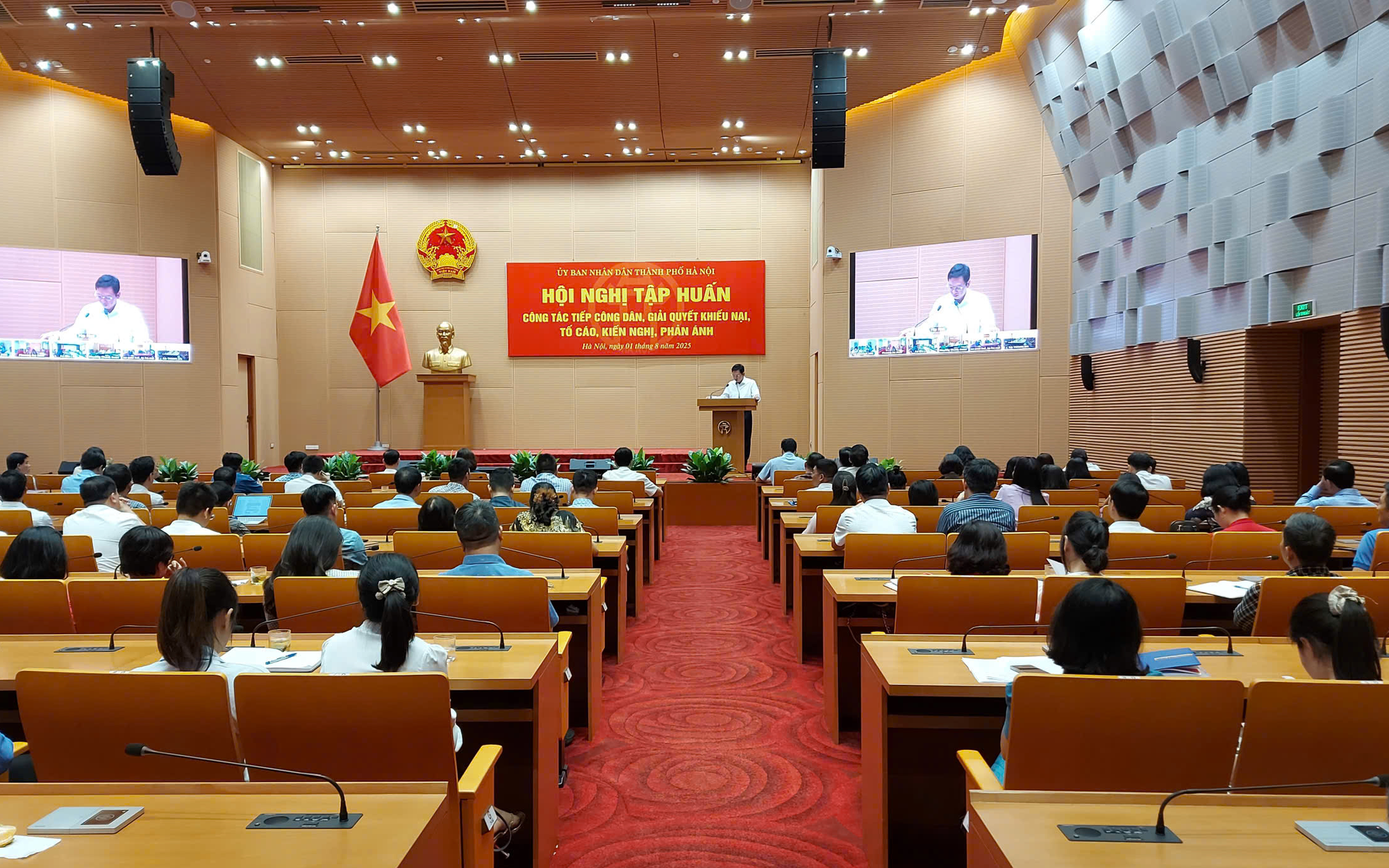
Overview of the training.
The purpose of the training was to promptly provide and reinforce necessary skills, clarify unresolved issues after the recent administrative restructuring into a two-level local government system, and raise awareness, accountability, and capacity among officials responsible for handling citizen reception and complaints across Hanoi.
Speaking at the conference, Vice Chairman Le Hong Son emphasized that Hanoi has actively implemented Central Government resolutions and conclusions from the Politburo and Party Secretariat on restructuring government operations under the new two-level model.
He stressed that the task of citizen reception and complaint resolution plays a crucial role in the new structure. He noted that the reorganization significantly affected staffing and organizational structures responsible for complaint resolution at the ward, commune, and department levels, especially following the merger and consolidation of the city's inspection system, and the closure of district-level and department-level inspection units.
According to Vice Chairman Son, current regulations on citizen reception and complaint resolution continue to evolve. As such, today's training conference holds critical importance in preventing service disruptions and maintaining compliance.
To ensure the training is effective, he requested that department leaders and chairpersons of commune and ward-level People's Committees attend the sessions fully, engage actively at their respective sites, study the materials carefully, and openly share challenges encountered in practice.
"This collaborative approach will help develop practical solutions that can be implemented effectively at each level of government," he said.
He instructed all agency heads and local leaders to fully disseminate and seriously implement the training outcomes after the conference. He emphasized that the reception of citizens and the handling of complaints and denunciations must follow legal procedures, within the right jurisdiction, completed on time, and with quality. These efforts, he stated, are essential to strengthening public trust in government institutions.
During the conference, Vu Van Chien, former Principal of the Inspectorate Officials Training School, conducted two specialized sessions. The first focused on responsibilities and requirements in citizen reception, while the second covered the process of handling complaints, denunciations, petitions, and feedback.
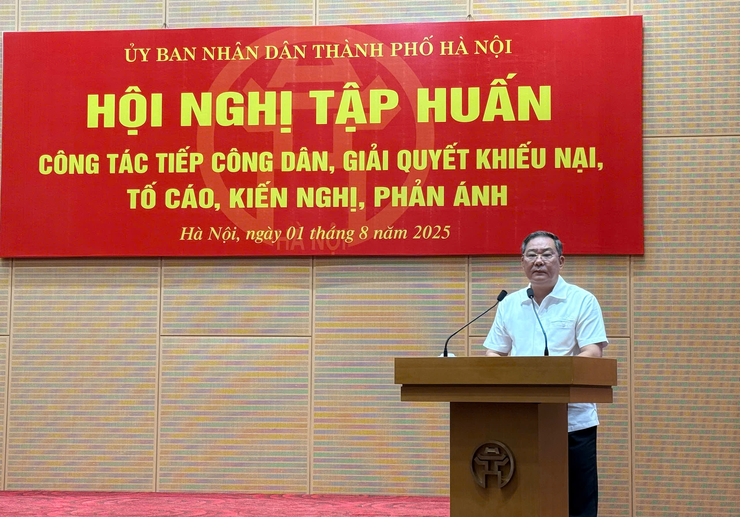
Vice Chairman of the Hanoi People's Committee Le Hong Son.
Chief Inspector of Hanoi Tran Duc Hoat also delivered remarks at the conference. He urged all local authorities, during the transition to the two-level government model, to ensure a complete and accurate transfer of responsibilities. He highlighted the importance of resolving incomplete complaint cases and implementing decisions and inspection conclusions that are already legally effective.
He also called for the early resolution of backlogged complaint cases. All handling procedures must comply closely with Decree No. 141/2025/ND-CP of the Government, which outlines the jurisdiction of two-level local governments in state inspection management, and Circular No. 02/2025/TT-TTCP of the Government Inspectorate, which provides detailed guidance on managing inspection work under the new two-level governance system.
If any difficulties or uncertainties arise during implementation, local authorities are instructed to promptly consolidate and send the issues to the Hanoi Inspectorate for support. This collaborative approach will help ensure timely, transparent, and effective resolution of ongoing complaints and enhance public service performance across the city.